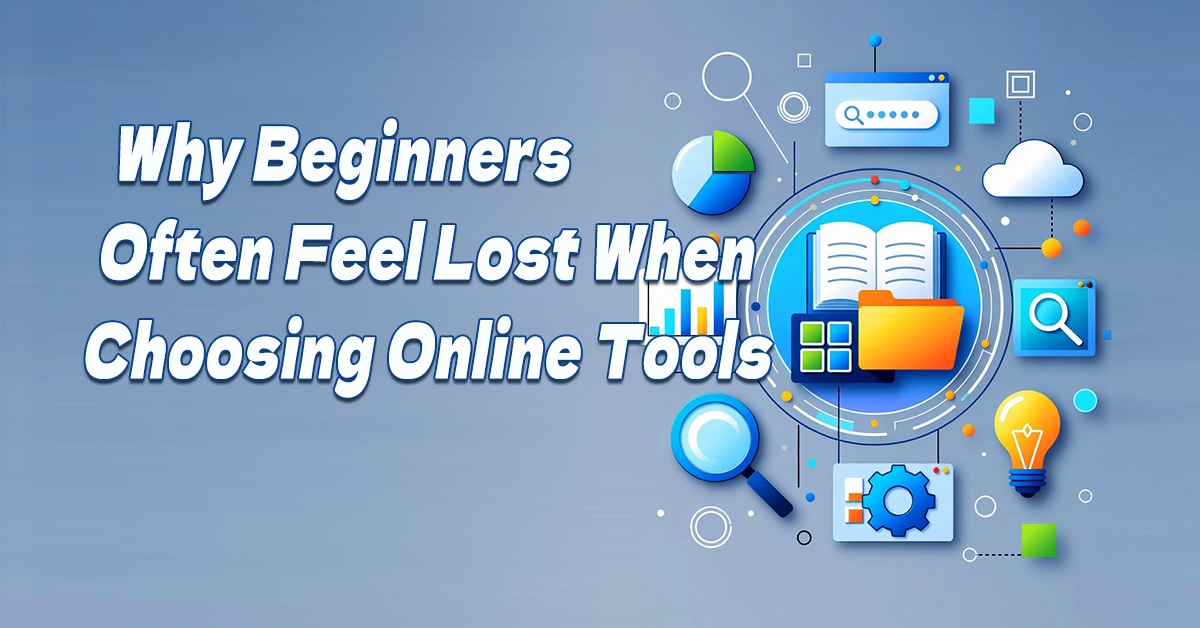
Why Beginners Often Feel Lost When Choosing Online Tools
For many beginners, choosing an online tool feels more difficult than it should be.
There are countless options available, each claiming to be faster, smarter, or more powerful than the rest. Instead of feeling supported, new users often feel overwhelmed and unsure where to start.
This sense of confusion is not caused by a lack of intelligence or effort. In most cases, it comes from how digital tools are presented and discussed online.
Too Many Choices Without Clear Context
One of the main reasons beginners feel lost is the lack of context surrounding online tools.
Articles and guides often focus on features, comparisons, or popularity, but they rarely explain who a tool is actually for.
Without understanding the intended use case, beginners may choose tools designed for teams, developers, or advanced workflows. These tools are not inherently bad, but they introduce unnecessary complexity for someone just starting out.
Feature Lists Can Be Misleading
Feature-heavy descriptions can create the impression that more functionality equals better performance.
For beginners, this often leads to choosing tools that are difficult to configure, maintain, or understand.
In reality, efficiency usually comes from simplicity. A tool with fewer features but a clear purpose is often easier to learn and more effective for everyday tasks.
Lack of Practical Guidance
Another challenge is that many resources explain what tools do, but not how people actually use them.
Beginners benefit more from understanding common usage patterns, typical mistakes, and realistic expectations.
Without this practical perspective, users may abandon tools too quickly or blame themselves for problems that are actually caused by poor tool fit.
The Pressure to Choose “The Best” Tool
Many beginners feel pressure to make the “right” choice immediately.
This mindset can create unnecessary stress, especially when tools are framed as long-term commitments.
In practice, most tools are interchangeable at an early stage. Learning how to evaluate tools gradually is far more valuable than finding a perfect solution from the start.
Focusing on Understanding Over Selection
Instead of trying to identify the best tool, beginners benefit more from understanding basic principles:
-
What problem am I trying to solve?
-
How complex is my current workflow?
-
What level of learning effort am I comfortable with?
Answering these questions helps narrow choices naturally, without relying on external rankings or opinions.
Building Confidence Through Experience
Feeling lost is often part of the learning process.
As beginners gain experience, patterns become easier to recognize, and tool selection becomes less intimidating.
The goal is not to avoid mistakes entirely, but to learn how to make better decisions over time. With a clearer understanding of needs and limitations, choosing online tools becomes a manageable and even empowering process.
Editor’s Note
This article was written based on common patterns observed among beginners exploring digital tools for the first time.
Rather than focusing on specific platforms or recommendations, the goal is to explain why confusion happens and how users can approach tool selection more calmly and thoughtfully.
Understanding these challenges early helps reduce frustration and builds a stronger foundation for using online services effectively.