Who this is for
This article is for absolute beginners who don’t fully understand what a domain name is or why it matters.
If you’ve ever wondered “Why do I have to pay every year just to keep a website address?” or “Is a domain the same as hosting?”, this article is for you.
No technical background needed.
The common confusion
Many beginners think a domain name is:
“The website itself.”
Because of this, people often believe:
-
Owning a domain means owning a website
-
Domains store website files
-
Domains affect website speed
None of these are true.
A domain name is not your website.
It doesn’t store content, files, or data.
It doesn’t make your site faster or slower.
So what is it actually doing?
How it actually works
What a domain name really is
A domain name is simply a human-friendly address for a website.
Instead of remembering numbers like:
We use names like:
The domain exists to make the internet usable for humans — not computers.
How a domain connects to a website
When someone types your domain into a browser, this happens:
-
The browser looks up the domain using DNS
-
DNS finds the server’s IP address
-
The browser connects to that server
-
The server sends back the website
The domain’s only job is step 1: pointing to the correct server.
Without hosting, a domain points to nothing.
Domain vs hosting (simple comparison)
This confusion causes most beginner mistakes, so let’s be clear:
-
Domain name
→ The address people type -
Hosting
→ The server where your website lives
You need both for a website to work.
A domain without hosting is like a street address with no building.
Hosting without a domain is like a building with no sign.
Why domains expire every year
Many beginners ask:
“Why do I have to renew my domain every year?”
Because you don’t permanently own a domain — you lease the right to use it.
Behind the scenes:
-
Domain registries manage global domain systems
-
Registrars sell time-based usage rights
-
Renewals keep records accurate and prevent conflicts
This system keeps the internet organized and prevents permanent name hoarding.
Do domain extensions matter?
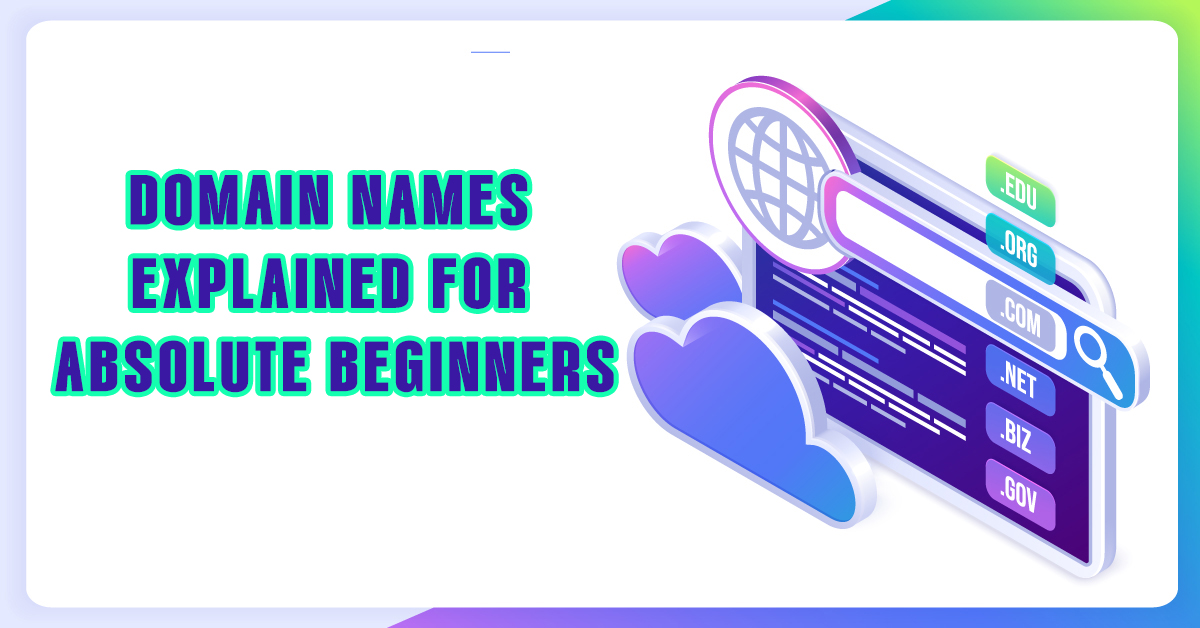
Extensions like:
-
.com -
.net -
.org -
.io
do not change how a website works technically.
However, they do affect:
-
Trust
-
Expectations
-
Memorability
For beginners, .com is still the safest and most widely recognized option.
Why this matters in real life
1. You stop mixing up responsibilities
Understanding domains helps you:
-
Know where problems actually come from
-
Contact the right service when issues happen
-
Avoid unnecessary changes
Many “website problems” are actually domain or DNS issues, not hosting problems.
2. You avoid paying for things you don’t need
Some services bundle domains, hosting, email, and extras together.
Without understanding domains, beginners often:
-
Buy duplicate services
-
Lose control of their domain
-
Get locked into providers unnecessarily
Knowledge gives you flexibility.
3. You make better long-term decisions
Your domain becomes part of your identity:
-
Personal brand
-
Business name
-
Long-term project
Changing it later is possible — but inconvenient.
Choosing carefully early on saves effort later.
What I recommend
If you’re just starting out, here’s what I recommend:
-
Buy your domain yourself
Don’t let third parties fully control it. -
Keep domain and hosting concepts separate
Even if you buy them from the same company. -
Choose clarity over creativity
Simple, readable names beat clever but confusing ones.
A domain should be easy to remember, easy to type, and easy to explain.
Related articles
To understand domains in context, read these next:
-
How Websites Actually Work (From URL to Page Load)
-
What Is Website Hosting and Why It Matters
-
Frontend vs Backend Explained With Real Examples
Final note
Domains feel abstract because you can’t see them working.
But once you understand their role, they stop being mysterious — and start feeling like what they really are: a simple but essential pointer.